How to Negotiate Commercial Battery Storage Warranties: Service Boundaries and Clause Checklist
How to negotiate commercial battery storage warranties: from warranty coverage, response process, data logs to spare parts and software access, outline the service boundaries and clauses to clarify during procurement.

Commercial and industrial energy storage warranties don't end with a single line in the contract saying "whole-unit warranty." For buyers, what really needs to be confirmed is: who responds first when a fault occurs, who comes on site, which components and labor are covered, which operating data can be used to diagnose the issue, and how to keep things moving when the system isn't back online. Writing these points clearly before placing an order reduces repeated disputes after delivery over whether something is "covered by warranty."
First, distinguish equipment warranty, service support, and operational responsibility
Equipment warranty covers responsibility for handling quality issues with components under agreed conditions; service support covers remote diagnostics, on-site response, spare parts coordination, and fault closure; operational responsibility involves who—owner, O&M provider, or system integrator—is responsible for routine inspections, parameter changes, and operating records. These three cannot be lumped together under a vague "after-sales" label. Procurement documents should separately list the responsible parties, communication channels, handling steps, and handover conditions.
Write warranty coverage down to an identifiable level
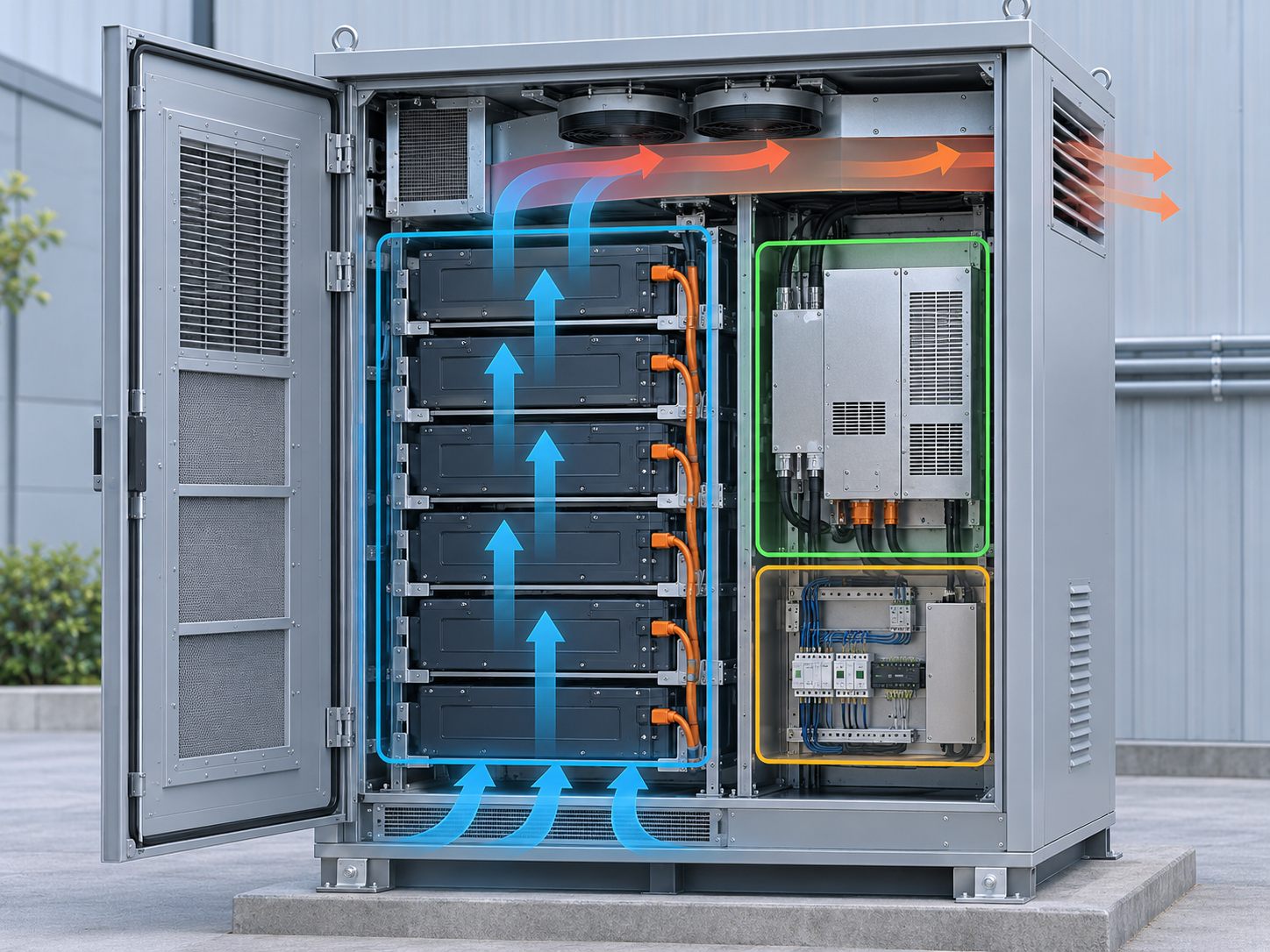
An energy storage system typically includes batteries, BMS, PCS, EMS, thermal management, power distribution, and communication components. The contract or technical annex should specify the warranty coverage at each level, serial numbers or configuration versions, and who provides the service. For equipment supplied by third parties, the fault intake window and coordination method should also be clarified. This way, when an issue arises, the initial assessment won't be delayed by "that's not my component."
Clarify the warranty start point and validity conditions
When the warranty starts needs to correspond to milestones such as delivery, installation, commissioning, acceptance, and commercial operation. It should also clearly state the operating conditions required to keep the warranty valid—for example, whether maintenance must be completed as agreed, whether remote upgrades are permitted, and how logs should be retained after a shutdown. The point isn't to add restrictions, but to ensure both parties share the same understanding of the basis for judgment. Conditions without records are hard to prove later regarding the system's state at the time.
Write response times as a process, not just a promise
Rather than stating a single response duration, it's more practical to break fault handling into intake, remote initial diagnosis, on-site support, spare parts arrangement, recovery verification, and work order closure. Each step should specify trigger conditions, responsible persons, and information to be retained. The owner should also designate a contact person and provide basic information such as alarm screenshots, event timing, operating mode, and site constraints to help shorten diagnosis time. For faults affecting operation, communication frequency and escalation paths should be agreed upon.
Define issues with data and logs, not verbal judgment
The causes of energy storage faults may involve equipment, installation, external grid, communications, or operating strategy. It's advisable to agree on the accessible data scope—such as alarm codes, SoC, power commands, temperature trends, communication status, and version information—and explain how data is exported, stored, and permission-managed. After an event, records with consistent timestamps should be retained; any parameter adjustments should leave a record of the reason and approval. Complete data is what makes technical judgments reviewable.
Spare parts and on-site support should be confirmed separately
"Providing spare parts" doesn't mean all spare parts will be available at the same time and place. Buyers can require clarity on supply responsibility for critical spare parts, whether reserves are needed, who manages inventory, and how system recovery is verified after replacement. On-site support should also distinguish between remote guidance, site inspection, repair, and re-commissioning, avoiding mixing different service forms into one vague clause.
Software, communications, and remote access should also be included
For projects using BMS, PCS, EMS, and monitoring platforms, software versions and communication interfaces affect system availability. It should be clear who has permission to upgrade, modify strategies, or view logs; whether evaluation and rollback plans are required before upgrades; and what the system's default safety strategy is during communication interruptions. Remote access accounts, permissions, and audit records should also be handed over at delivery, rather than being temporarily held by one party.
Use calculable operating metrics to support acceptance
Project parties can record planned operating time, actual available time, downtime events, and recovery time separately. A basic formula is: Availability = Actual Available Time ÷ Planned Operating Time × 100%. The formula itself cannot replace a complete contract definition, but it helps both parties discuss issues based on the same time frame during reviews. Before use, both parties should confirm whether planned downtime, external curtailment, and force majeure are included in the denominator.
Warranty exclusions must be specific and verifiable
Exclusions should not just say "abnormal use" but should be linked to identifiable conditions and records as much as possible—for example, unauthorized rewiring, unauthorized changes to protection parameters, exceeding agreed environmental limits, or missing required maintenance records. At the same time, the supplier should explain how to present evidence and recommendations upon discovering anomalies. Clear exclusions are not about shifting responsibility, but about letting site personnel know which operations require prior confirmation.
Checklist of clauses to confirm item by item before procurement
Before placing an order, confirm at least eight things: warranty coverage and start point; fault reporting channels; remote and on-site support processes; critical spare parts arrangements; operating data and log permissions; software upgrades and rollback; basis for determining exclusions; work order closure and retest criteria. Align these with the equipment list, communication point table, and acceptance documents so that warranty terms are truly executable after the project goes into operation.
Conclusion
The key to commercial and industrial energy storage warranties isn't how much is promised, but whether service boundaries, data basis, and handling processes can be applied to every fault case. Determining responsibilities and record-keeping methods during procurement makes it easier to achieve closure in subsequent operations. For selection materials, please contact Haisi Power.