What Size Home Battery Storage Do You Need? Three Steps to Calculate Your Home's kWh Requirement
Oversize it, and the extra cost won't pay back in ten years; undersize it, and you'll still be buying grid power at night. There's only one reliable way to size it: look at how much your own home actually used over the past year.
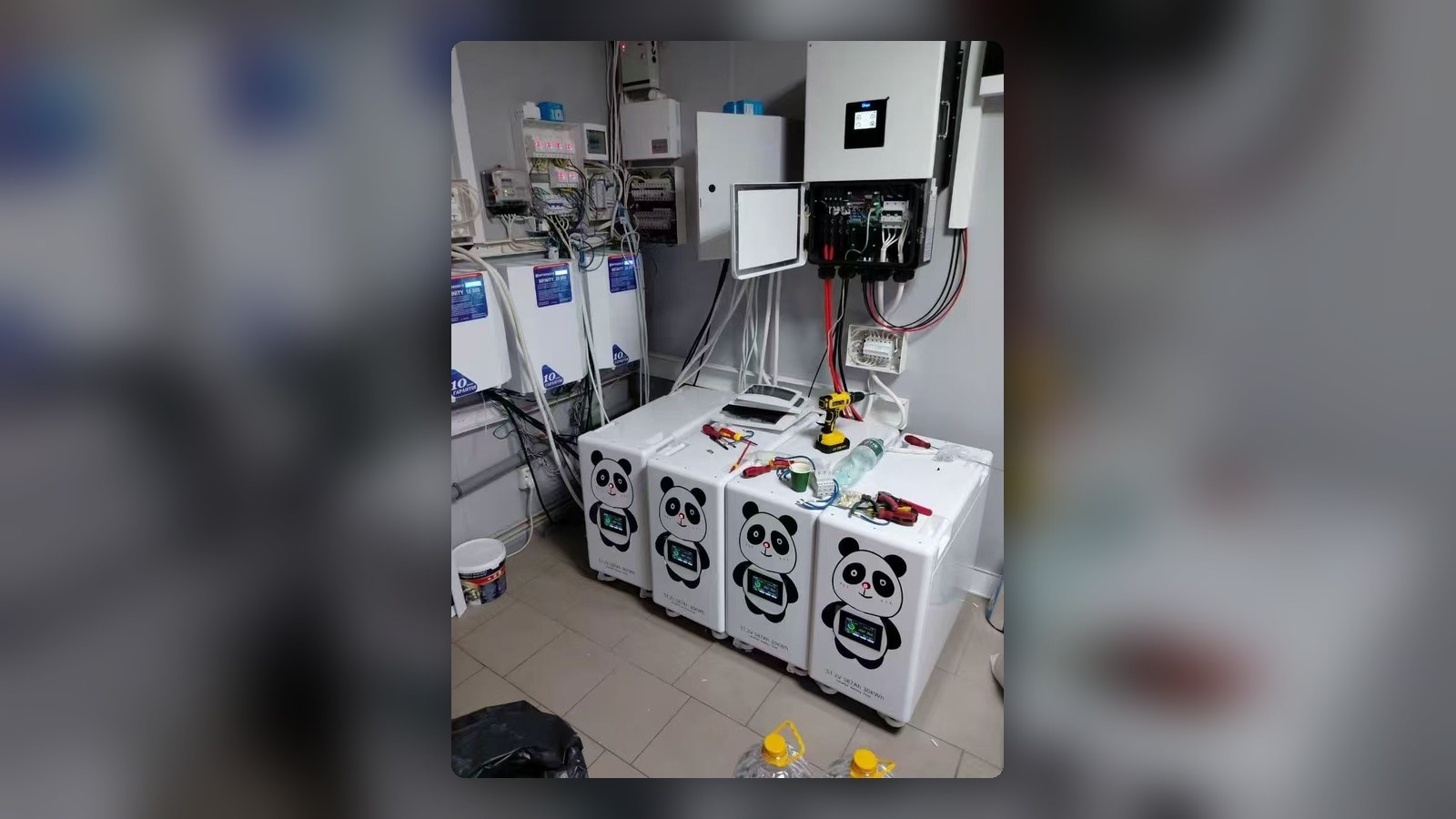
Most of the sizing advice circulating online is rule-of-thumb stuff like "a family of three needs 10 kWh." Such numbers are fine as a reference, but ordering based on them is a big problem—two families of three can differ threefold in electricity use: one running air conditioning in the south in summer, the other using electric heating in the north in winter.
The method below uses only the data you already have and takes ten minutes to work through.
Step 1: Calculate the electricity you need to cover
Take your electricity bills from the past 12 months (or export your usage details from your utility app) and do two things:
- Add up the monthly electricity usage for the 12 months and divide by 365 to get the average daily total electricity usage
- Identify the portion used outside the daytime solar generation hours—that is, from evening to the next morning
If you can't get time-of-use data, use a simplified approach: nighttime usage is about 55%–65% of the average daily total (most households have nobody home during the day, but air conditioners and refrigerators run 24 hours).
Example: 6,000 kWh used in a year, 16.4 kWh per day on average, taking 60% for the nighttime portion gives about 9.9 kWh. That is the amount you want storage to cover.
Step 2: Leave a margin and work backward to battery capacity
A battery can't be drained completely; lithium iron phosphate typically keeps a 10% protection margin, meaning usable capacity is 90% of nominal. The system itself also has losses (inverter, wiring), with overall efficiency around 88%.
Required battery capacity = electricity to cover ÷ 0.9 ÷ 0.88 ≈ electricity to cover × 1.26
Continuing the example above: 9.9 × 1.26 ≈ 12.5 kWh. Rounding up to a standard tier, 15kWh is a good fit, leaving a little margin for winter or appliances added later.
Step 3: Adjust for special circumstances
Three common situations call for extra capacity:
- You have an EV charger—a home charger is 7kW, so 3 hours of charging overnight is 21 kWh. Whether to run the charger off storage is a separate economic calculation; generally we recommend metering it separately and not tying it into storage
- You need backup power—if the goal is to keep the whole house powered during an outage, calculate based on "critical load power × desired backup duration," not on saving electricity costs; the optimal capacity for these two goals is usually different
- Large solar installation—if solar generation far exceeds self-consumption and the feed-in tariff for surplus power is low, you can appropriately increase storage to save more surplus energy
Comparison table: how different households should size
| Household situation | Average daily usage | Recommended storage capacity | Notes |
|---|---|---|---|
| Small apartment / two people | 8 – 12 kWh | 5 – 8 kWh | Mainly covers basic evening usage |
| Family of three (no EV charger) | 15 – 22 kWh | 10 kWh | Most common configuration, best value |
| Detached house (with EV charger) | 25 – 35 kWh | 15 kWh | Charger recommended on a separate circuit |
| Large home / multiple AC units | 35 – 50 kWh | 20 kWh | Often paired with three-phase power |
| Backup-focused | Depends on load | Power × duration | Different calculation from saving on electricity costs |
Two common pitfalls
Pitfall 1: Oversizing for "might need it later"
The cost of storage batteries is basically proportional to capacity; 5kWh more means several thousand more. And if that capacity goes unused for a long time, it's wasted investment. Most home storage today supports modular stacking, so you can add battery packs later—no need to buy it all up front.
Pitfall 2: Looking only at capacity, not power
Capacity determines "how much can be stored"; power determines "what can be run at the same time." If you have high-power devices like an instant electric water heater or central air conditioning, confirm that the storage system's continuous output power is sufficient. No matter how large the capacity, it still can't run them if the power isn't enough.
Not sure? Send us your data
Tell us four things—your average daily usage, whether you have solar, whether you have an EV charger, and your main high-power appliances—and we'll give you a capacity recommendation with reasoning, plus a comparison of returns for different capacity options. No guessing, and no being led along by a salesperson.