LFP or NMC? Why Nearly All Energy Storage Systems Use LFP
NMC delivers nearly twice the energy density and is virtually standard in EVs. Yet you almost never see it in energy storage cabinets. This is not a matter of habit—it is the inevitable result of weighing four hard metrics.
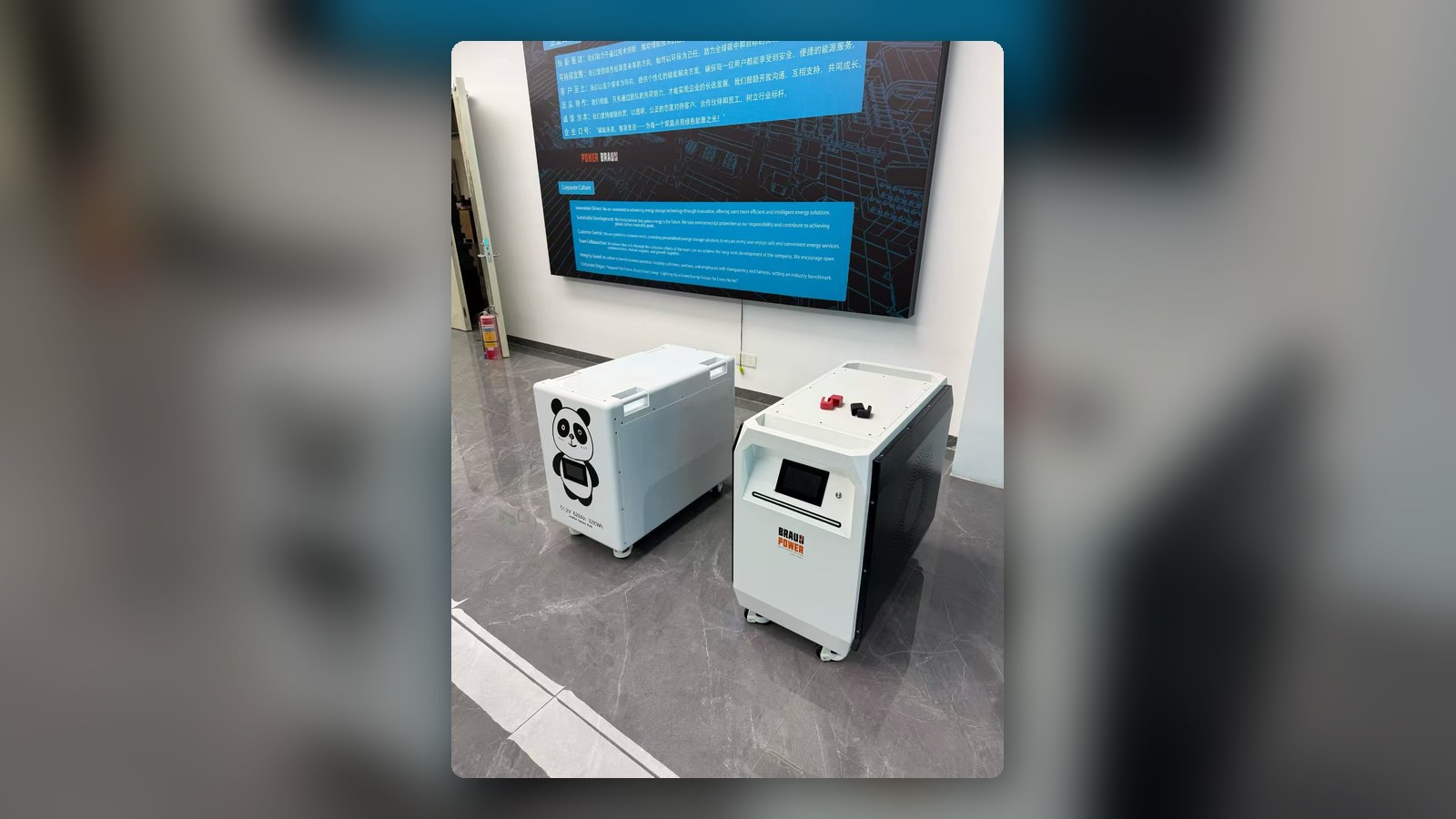
Let's start with the conclusion: For energy storage scenarios, choose lithium iron phosphate not because it's better, but because it's more cost-effective. The advantage of ternary lithium in energy density is almost irrelevant in fixed-installation energy storage scenarios; while its disadvantages in lifespan and safety are exactly what energy storage cares about most.
Core Parameter Comparison
| Comparison Item | Lithium Iron Phosphate LFP | Ternary Lithium NMC | Which is more suitable for energy storage |
|---|---|---|---|
| Energy Density | 120–160 Wh/kg | 200–260 Wh/kg | Ternary lithium (but energy storage is not sensitive) |
| Cycle Life | 4000–8000 cycles | 1500–3000 cycles | Lithium Iron Phosphate |
| Thermal Runaway Temperature | About 270℃ | About 150–200℃ | Lithium Iron Phosphate |
| Cost per kWh | Low | High 30%–50% | Lithium Iron Phosphate |
| Low-Temperature Performance | Poor | Better | Ternary lithium |
| Material Cost Volatility | Small (no cobalt or nickel) | Large (affected by cobalt and nickel prices) | Lithium Iron Phosphate |
Dimension 1: Cycle life directly determines whether you can recoup the investment
The business model of energy storage is daily charging and discharging, continuously for ten years. Calculating 330 cycles per year, ten years is 3300 cycles.
- Lithium iron phosphate achieving 6000 cycles is a conventional level; after ten years of operation, capacity typically remains above 80%, covering the entire project cycle
- Ternary lithium mainstream is 2000–3000 cycles; a ten-year project would require replacing battery cells midway or accepting significant capacity degradation
Converting lifespan into cost per kWh (total investment ÷ total discharge over the full lifecycle) shows an even more obvious gap: the cost per kWh of lithium iron phosphate is typically only about half that of ternary lithium. For energy storage projects that make money from peak-valley price differences of a few cents or dimes, this is decisive.
Dimension 2: The thermal runaway temperature gap is the safety bottom line
The olivine crystal structure of lithium iron phosphate is very stable, with a thermal runaway onset temperature of about 270℃; ternary lithium can experience thermal runaway at 150–200℃, and once triggered, the reaction is more violent and harder to control.
The meaning of this difference is completely different for the two scenarios:
- Vehicle scenarios — limited space, possible collisions, high priority on energy density, so willing to equip ternary lithium with complex thermal management systems
- Energy storage scenarios — commercial and industrial energy storage cabinets are often 1MWh or more, installed in factories or buildings; once an accident occurs, the consequences are uncontrollable. Safety redundancy is far more important than saving space
This is also why lithium iron phosphate is almost a mandatory requirement in domestic large-scale energy storage power station tenders.
A 1MWh containerized energy storage system contains hundreds of battery cells connected in series and parallel. If any single cell experiences thermal runaway and triggers a chain reaction, the loss is not just equipment. The logical starting point for safety design in energy storage projects is "choose battery cells that are as unlikely to run into thermal runaway as possible."
Dimension 3: Energy density is simply not needed in energy storage scenarios
This is the most critical point. The biggest selling point of ternary lithium is "more electricity stored in the same weight," which means range for electric vehicles, but what does it mean for energy storage?
Energy storage cabinets are fixed installations, placed on the ground, in factory corners, or in outdoor containers. They do not need to be moved, nor do they occupy vehicle interior space. The land cost of occupying an extra half square meter is far lower than spending 40% more on battery cells.
The only exception is portable energy storage power supplies — which need to be carried by hand or in vehicles and are weight-sensitive. But even in this category, mainstream manufacturers have been shifting to lithium iron phosphate in recent years, because users' demand for "can be used for ten years" has surpassed their demand for "one kilogram lighter."
Dimension 4: Stable material costs allow long-term commitments in quotations
Ternary lithium contains cobalt and nickel, and the prices of these two metals fluctuate violently, with historical cases of doubling within a year. Lithium iron phosphate mainly uses iron and phosphorus, with stable supply and steady prices.
This directly affects the business level: the ten-year warranty and long-term supply agreements we quote to customers are premised on predictable costs. With ternary lithium, the quotation cycle can only be shortened, and long-term commitments carry too much risk.
So does ternary lithium have no place at all in energy storage?
There are two niche scenarios that would still be considered:
- Outdoor applications in extremely cold regions — in environments below minus 30℃, lithium iron phosphate's low-temperature performance degrades significantly and requires additional heating systems; ternary lithium performs better at low temperatures
- Mobile scenarios with extreme volume constraints — such as RVs and ships, where installation space is measured in liters
Apart from these, for residential, commercial and industrial, and grid-side energy storage, lithium iron phosphate is the default choice.
The three questions you should really ask when selecting
Rather than agonizing over "lithium iron phosphate or ternary lithium," it's better to focus on these three items, which have a greater impact on actual experience:
- Are the battery cells Grade A or Grade B? — With the same nominal lithium iron phosphate, the lifespan of Grade A and salvaged cells can differ by three times. Require the battery cell manufacturer's test report
- What are the test conditions for the cycle count? — 0.5C, 25℃, 80% DOD versus 1C, 45℃, 100% DOD produce numbers that are completely different in magnitude
- Is the BMS self-developed or a generic version? — Cell consistency and balancing strategy directly determine how long the entire pack can actually be used
These three questions are far more important than which chemistry system to choose. We provide the battery cell manufacturer's test report for every batch and also accept third-party re-inspection — because these things can be verified, not bluffed.