Solar + Storage Self-Consumption: Why Adding BESS Lifts Self-Consumption from 30% to 80%
Of the solar power generated during the day, typically less than 30% is consumed on-site, with the remainder exported to the grid at low prices. With storage added, that power is retained for evening use—this article lays out self-consumption rate, capacity sizing, and equipment selection in one go.
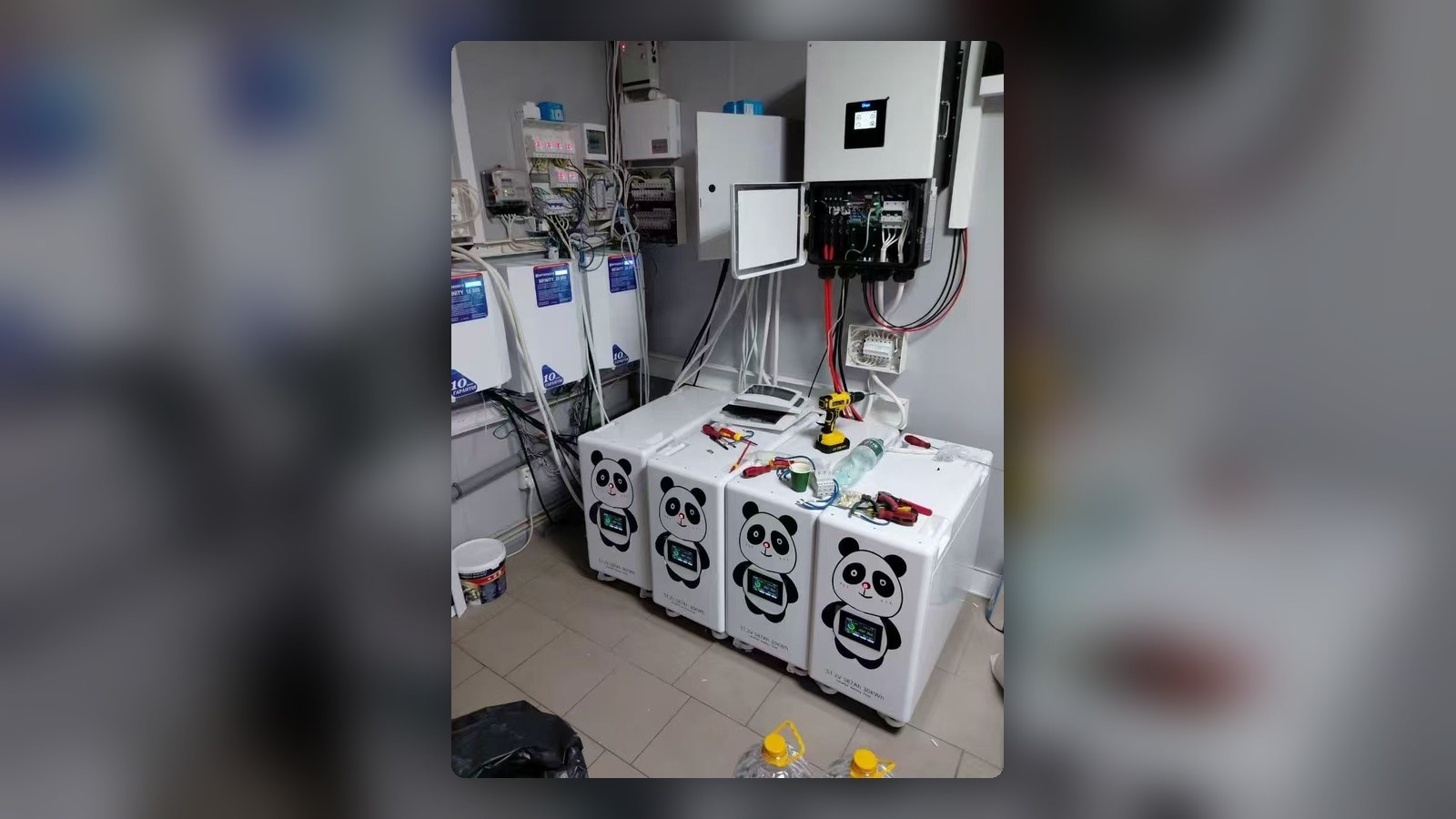
Families and factories that have installed PV all share a common problem: the power generated during the day is more than can be used, and by the time they want to use electricity at night, the PV has already clocked off. In a system without energy storage, surplus power can only be sold to the grid at a price far below the electricity price, and at night electricity has to be bought back from the grid at a high price—round and round, the money is all eaten up by the price difference.
1. Where the 30% self-consumption rate comes from
Take a typical home PV system as an example: average daily generation of 20 kWh, but with few people at home during the day and only air conditioning and refrigerators as loads, actual daytime consumption is around 6 kWh, and about 70% of the generation is either absorbed by the grid or curtailed. The ratio for commercial and industrial rooftops is even more extreme; many factories have a PV self-consumption rate of less than 30%.
2. What happens after adding energy storage
After adding a 10–30 kWh lithium iron phosphate battery energy storage system (BESS), the system logic becomes:
- Daytime: PV generation → supplies loads first → surplus power is charged into the battery instead of being fed to the grid at a low price;
- Evening peak period: the battery discharges to power the whole home, avoiding buying peak-price electricity;
- Late-night valley period (in regions with peak-valley tariffs): it can also charge at a low price, further reducing costs.
With the same 20 kWh of daily generation, after pairing with 10 kWh of storage, the self-consumption rate can steadily reach 75%–85%. Based on an electricity price difference of 0.6 yuan/kWh, the value of one kWh of electricity is roughly doubled.
3. What capacity is suitable
| Scenario | Recommended capacity | Corresponding product |
|---|---|---|
| Family of three, average daily consumption 8–12 kWh | 5–10 kWh | L5 / L7 cabinet energy storage |
| With EV charger / large-area residence | 10–16 kWh | L11 / SE15 / Pro16 |
| Villa / all-electric home | 16–35 kWh | SE21 – SE35 / Pro30 |
Rule of thumb: energy storage capacity ≈ average daily consumption × 0.5–0.8, then fine-tune based on local peak-valley price differences and feed-in tariffs. If unsure, send your 12 months of electricity bills to our engineers for a free calculation.
4. How to choose equipment: three non-negotiable points
- Cell quality: must be brand-new Grade A lithium iron phosphate cells (EVE / BYD / CATL), with a cycle life starting at 6,000 cycles;
- BMS communication compatibility: RS485 / CAN protocols must be able to interface with your inverter brand (mainstream brands such as Huawei, Sungrow, Growatt, and Deye all have mature adaptations);
- Protection and certification: for outdoor installation, check the IP rating; for export projects, look for UN38.3 / IEC 62619 / CE.
5. What Haisi Power can provide
Haisi Power is a source factory for lithium iron phosphate energy storage systems in Shenzhen, with a 12,000㎡ plant and 6 automated production lines. Its full residential energy storage lineup covers 5–35 kWh, 12 models in total: the small cabinet L series, the Premium high-end line (Pro, 5-year warranty, CATL/CALB cells), and the Entry economical line (SE, BYD cells). PV-plus-storage, off-grid backup power, and OEM labeling are all available, with global shipping supported (EXW / FOB / CIF).